
Introduction
Your eyes work for you every single day, yet most people only think about eye health when something starts to feel wrong. One of the most common but often ignored eye problems is blepharitis eye disease, a long-term inflammation of the eyelids that can quietly affect your comfort, vision quality, and daily life.
At EDO Wah, we believe that healthy eyes are a gift, and protecting them starts with awareness. This detailed guide will help you understand what blepharitis is, what causes it, how to recognize its symptoms early, the different types you should know about, and the most effective treatment options available today. Whether you are dealing with mild eyelid irritation or recurring discomfort, this article will give you clear, practical information you can act on.
This article has been medically reviewed by professional Doctors of, Eye Specialist at EDO Wah, to make sure the information is accurate and reliable.
1. What Is Blepharitis Eye Disease:
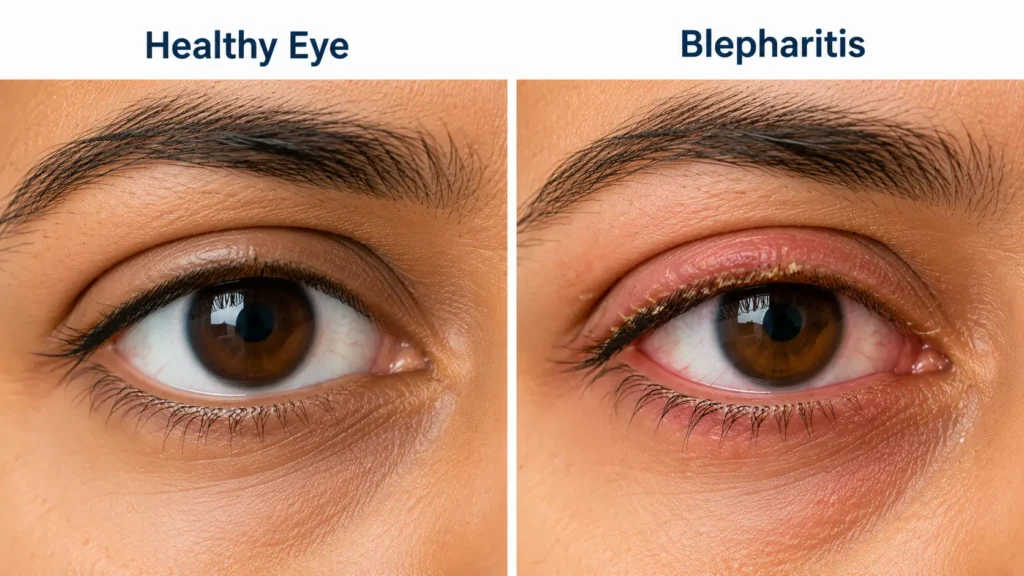
Blepharitis is a chronic inflammation of the eyelids, particularly along the edges where the eyelashes grow. The condition affects the skin, oil glands, and tear film around the eye, leading to irritation, redness, and crusty buildup along the lash line.
It is not contagious, and in most cases it does not threaten your vision directly. However, it tends to be persistent. Once you have it, blepharitis tends to come and go in cycles, which is why ophthalmologists and optometrists describe it as a long-term condition that needs daily care rather than a one-time cure.
Some people describe blepharitis as feeling like there is sand or grittiness in the eye. Others notice their eyelids look swollen, red, or oily by the end of the day. Because the symptoms overlap with dry eye syndrome and other eye conditions, it is often misdiagnosed or left untreated for months.
2. How Common Is Blepharitis:
Blepharitis is far more common than people realize. According to clinical estimates published in ophthalmology research, blepharitis may affect anywhere between 37 and 47 percent of patients seen by eye care specialists, and the prevalence increases with age. It can affect children, young adults, and older adults alike, although middle-aged and elderly patients are diagnosed most frequently.
The condition is also commonly associated with skin disorders such as rosacea, dandruff (seborrheic dermatitis), and oily skin. These underlying skin conditions play a much larger role in triggering blepharitis than everyday lifestyle factors.
3. Symptoms of Blepharitis:
The symptoms of blepharitis can range from mild morning irritation to severe ongoing discomfort. Recognizing these signs early is the first step toward managing the condition before it gets worse.
Common symptoms include:
- Red, swollen, or itchy eyelids that feel tender to the touch
- Crusty eyelashes, especially noticeable when you wake up
- A burning or stinging sensation in the eyes
- A gritty feeling or grittiness, as if something is stuck inside the eye
- Watery eyes or excessive tearing
- Sensitivity to bright light (photophobia)
- Dry eye symptoms that do not improve with regular eye drops
- Flaking skin around the eyes, similar to dandruff
- Blurred or fluctuating vision that clears up after blinking
- Frequent styes or chalazia on the eyelid
- Loss or misdirection of eyelashes in more advanced cases
These symptoms often appear in both eyes at the same time. If you notice them mostly in one eye, or if they are accompanied by sudden vision loss, you should consult an eye specialist immediately.
It is worth noting that sticky eyelids that are difficult to open in the morning are more commonly linked to bacterial conjunctivitis rather than blepharitis. If this is your main symptom, get checked by an eye doctor to confirm the diagnosis.
4. Causes of Blepharitis
Blepharitis does not have one single cause. It usually develops when a mix of factors disturbs the natural balance of the skin and oil glands around the eyes. Understanding the causes of blepharitis is important because the right treatment often depends on what is triggering the inflammation in the first place.
Main Causes Include:
1. Bacterial Overgrowth
Bacteria, especially Staphylococcus, naturally live on the skin and eyelids. When their numbers grow too high, they can irritate the eyelid margins and cause chronic eyelid infection.
2. Meibomian Gland Dysfunction (MGD)
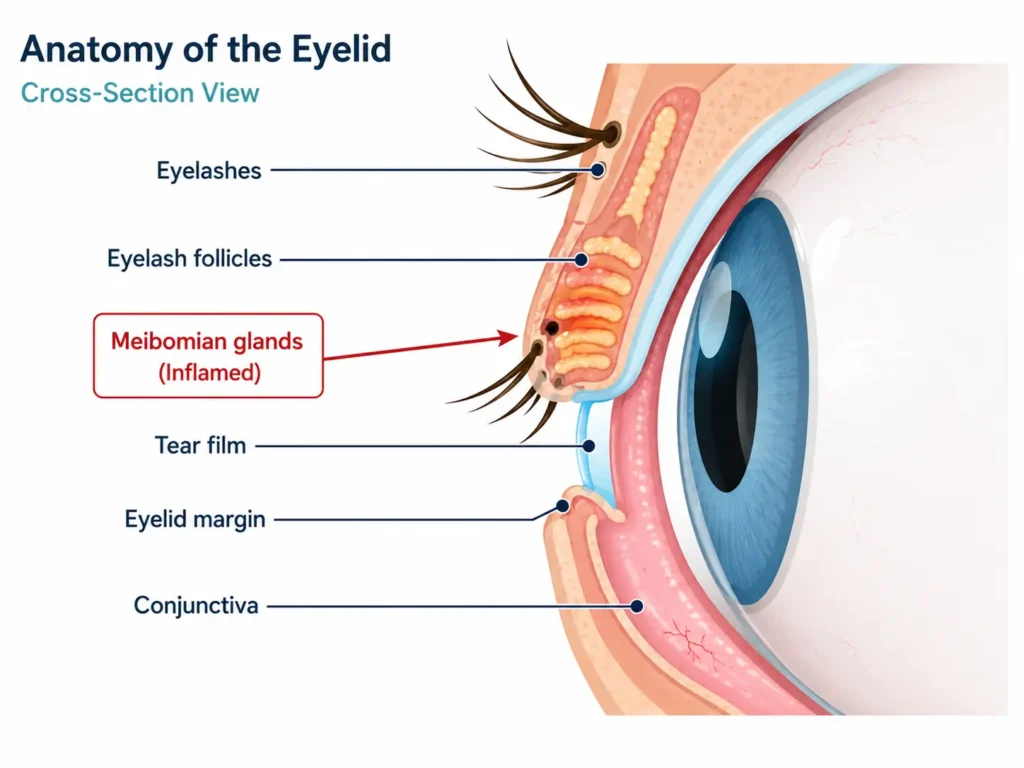
The meibomian glands inside your eyelids produce the oily layer of your tears. When these glands get blocked or stop working properly, the tear film evaporates too quickly, leading to dry eye syndrome and posterior blepharitis.
3. Seborrheic Dermatitis (Dandruff)
Flaky, oily skin on the scalp and face often spreads to the eyelid area, leading to seborrheic blepharitis.
4. Demodex Mites
Tiny mites called Demodex live in the hair follicles of the eyelashes. In small numbers they are harmless, but when they multiply, they can cause significant eyelid inflammation and itching.
5. Allergic Reactions
Reactions to eye makeup, contact lens solutions, certain medications, or even pet dander can inflame the eyelids.
6. Skin Conditions
Rosacea, eczema, and psoriasis are strongly linked to chronic blepharitis.
7. Hormonal Changes
Shifts in hormones, especially during menopause, can change the quality of oil produced by the meibomian glands, increasing the risk of inflammation.
When you understand these eye irritation causes, it becomes easier to spot what might be triggering your own symptoms.
5. Common Types of Blepharitis
Blepharitis is mainly classified into two types based on where the inflammation occurs along the eyelid. Knowing the type matters because it directly affects your treatment plan.
The Two Main Types of Blepharitis
1. Anterior Blepharitis
This affects the outside front edge of the eyelid where the eyelashes attach. It is usually caused by:
- Staphylococcal infection, where bacteria build up around the lash line
- Seborrheic dermatitis, often linked with scalp dandruff and oily skin
People with anterior blepharitis often see flaky scales and crusty eyelashes, especially after sleeping.
2. Posterior Blepharitis
This affects the inner edge of the eyelid that touches the eyeball. The most common cause is meibomian gland dysfunction, where the oil glands inside the eyelids get clogged or inflamed. This type is closely tied to dry eyes and is often seen in people with rosacea.
Other Forms You May Hear About
Beyond the two main types, eye specialists may also describe blepharitis based on the underlying cause or severity.
Demodex-Related Blepharitis
This is not a separate category in the standard anterior or posterior classification, but rather a contributing factor. It occurs when Demodex mites in the eyelash follicles multiply excessively. It often produces intense itching, especially in the morning, and a waxy buildup at the base of the lashes called collarettes. Recently approved medicated drops have made this easier to treat than before.
Mixed Blepharitis
Many patients have features of both anterior and posterior blepharitis at the same time, which is why a proper clinical diagnosis matters.
Ulcerative Blepharitis
A more severe form that can cause sores along the eyelid margin, lash loss, and scarring if left untreated. It requires prompt medical attention.
6. Risk Factors That Increase Your Chances
You are more likely to develop blepharitis if you have:
- Oily skin or dandruff
- Rosacea or eczema
- Diabetes
- A weakened immune system
- A habit of wearing eye makeup overnight
- A history of dry eye syndrome
- Environmental exposure to dust, smoke, or pollution
- Age above 50, when natural oil production decreases
Living in dusty climates, which is common in many parts of Pakistan including Wah Cantt, can also cause general eye irritation. While dust does not directly cause blepharitis, it can make existing symptoms feel worse.
Note: Long contact lens use is more commonly associated with conditions like keratitis rather than blepharitis itself. Still, anyone wearing contact lenses should follow proper hygiene to protect overall eye health.
7. How Blepharitis Is Diagnosed
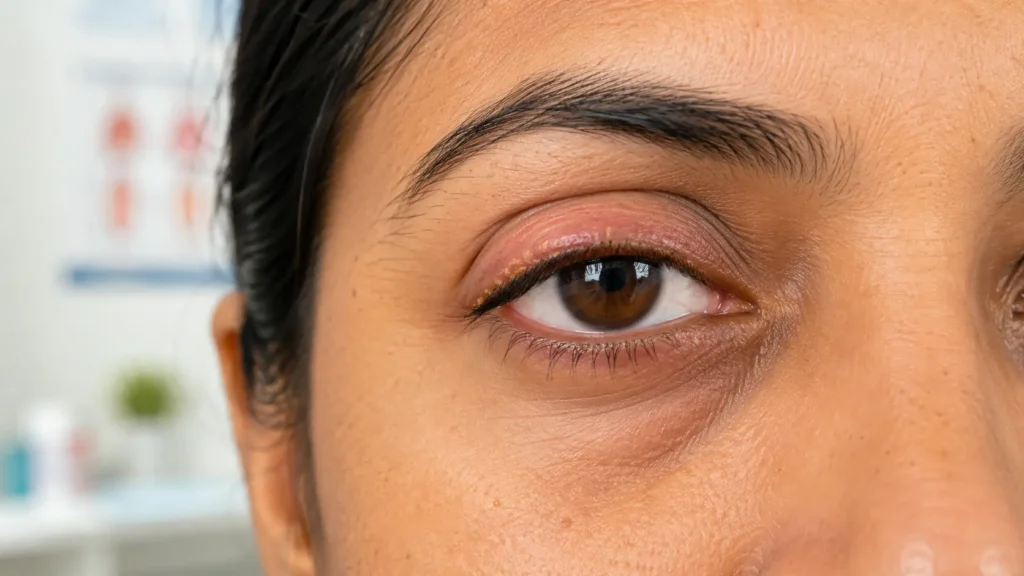
An eye specialist diagnoses blepharitis through a careful clinical examination. The process usually includes:
- Reviewing your medical history and asking about your symptoms
- Examining your eyelids and eyelashes under a magnified light called a slit lamp
- Looking for signs such as scales, crusts, redness, swelling, or oil gland blockages
- Checking your tear film quality to assess dry eye involvement
- In rare cases, taking a small sample (biopsy) from the eyelid to rule out skin cancer or other conditions
Self-diagnosis is not recommended because the symptoms can closely resemble other conditions like conjunctivitis, dry eye syndrome, or allergic reactions.
8. How Blepharitis Is Treated
Treatment focuses on controlling symptoms, reducing inflammation, and preventing flare-ups. Although there is no permanent cure, most people get significant relief with the right combination of therapies.
Standard Treatment Options Include:
1. Eyelid Hygiene
Daily cleaning is the foundation of all blepharitis treatment plans. This includes warm compresses, gentle eyelid massage, and proper lid scrubs.
2. Warm Compresses
Applying a warm, damp cloth to closed eyelids for 10 to 15 minutes helps loosen crusts and unblock oil glands. Doctors often recommend doing this two to four times a day during flare-ups.
3. Eyelid Scrubs
A diluted baby shampoo solution or a commercially available eyelid cleanser can be used to gently wipe along the lash line and remove debris.
4. Antibiotic Treatment
For bacterial blepharitis, doctors may prescribe topical antibiotics such as erythromycin or bacitracin. In more severe cases, oral antibiotics like doxycycline or azithromycin may be used.
5. Anti-Inflammatory Drops
Short-term steroid eye drops can reduce inflammation. Cyclosporine drops are sometimes used for chronic cases. These should only be used under medical supervision.
6. Treatment for Demodex Mites
A newer FDA-approved medicated eye drop called lotilaner has shown strong results in eliminating Demodex mites and reducing related symptoms.
7. Nutritional Support
Some patients with associated dry eye benefit from omega-3 supplements, although evidence for direct improvement in blepharitis alone is still being studied. Always consult your doctor before starting any supplement.
8. In-Office Procedures
For stubborn cases, eye specialists may recommend:
- Thermal pulsation therapy (such as LipiFlow), which warms and gently expresses clogged oil glands
- Intense Pulsed Light (IPL) therapy, which reduces inflammation and improves gland function
- Microblepharoexfoliation, where a small device cleans the eyelid margins more thoroughly than home methods
9. Treating Underlying Conditions
If rosacea, dandruff, or another skin condition is contributing to your blepharitis, treating that condition often improves the eyelid symptoms.
9. Daily Eyelid Hygiene Routine for Long-Term Relief:
Eyelid hygiene treatment is the single most important habit for managing blepharitis. Here is a simple step-by-step routine you can do at home:
Step 1: Wash Your Hands
Always start with clean hands to avoid introducing more bacteria.
Step 2: Apply a Warm Compress
Soak a clean cloth in warm (not hot) water, wring out the excess, and place it over your closed eyelids for about 10 minutes. Reheat as needed.
Step 3: Gentle Massage
After the compress, gently massage your eyelids in small circular motions for about 30 seconds to help express any oil trapped inside the glands.
Step 4: Clean the Lash Line
Mix a few drops of baby shampoo with warm water, or use a doctor-approved eyelid cleanser. Use a clean cotton pad or your fingertip to gently wipe along the base of your eyelashes.
Step 5: Rinse and Pat Dry
Rinse with clean water and gently pat the area dry with a soft, clean towel.
Doing this once or twice daily can prevent most flare-ups. Use a separate cloth for each eye to avoid spreading bacteria.
10. Home Remedies and Lifestyle Tips
Along with medical treatment, small daily changes can make a meaningful difference.
- Avoid eye makeup during flare-ups, and replace old mascara and eyeliners regularly
- Remove all makeup before going to bed
- Limit screen time and take regular breaks to reduce eye strain
- Use a humidifier in dry rooms to prevent tear evaporation
- Drink enough water to keep your body and eyes well hydrated
- Avoid rubbing your eyes, even when they feel itchy
- Wash pillowcases and towels frequently in hot water
- Use clean, fresh face towels every day to avoid reinfection
These small steps support eyelid hygiene treatment and reduce the chances of recurring symptoms.
11. When to See an Eye Doctor
You should consult an eye doctor if:
- Your symptoms last more than a few days despite home care
- Your eyelids become very swollen or painful
- You notice a change in your vision
- You develop a stye that does not heal
- You experience light sensitivity along with redness
- Your eyelashes start falling out or growing in odd directions
Early professional care can prevent complications and help you find a treatment plan that works for your specific type of blepharitis.
12. Possible Complications of Untreated Blepharitis
Although blepharitis usually does not threaten your eyesight, ignoring it for a long time can lead to other eye problems, including:
- Styes and chalazia (painful lumps on the eyelid)
- Chronic pink eye (conjunctivitis)
- Eyelash loss or misdirected lash growth
- Corneal ulcers, which can affect your vision in rare cases
- Scarring of the eyelid margin
- Worsening dry eye syndrome
- Increased risk of eye infections
This is why even mild symptoms deserve attention. Treating blepharitis early protects more than just your comfort, it also supports your long-term eye health.
13. How to Prevent Blepharitis
While you cannot always prevent blepharitis completely, you can lower your risk and reduce flare-ups by:
- Keeping your face and eyelids clean
- Treating dandruff and other skin conditions promptly
- Removing eye makeup every night
- Replacing eye makeup every three to six months
- Avoiding sharing towels, makeup, or contact lens solutions
- Wearing sunglasses outdoors as a required protective habit, especially in dusty areas
- Following your doctor’s recommended hygiene routine consistently
- Getting regular eye check-ups, especially after the age of 40
Prevention is always easier than treatment, and a few minutes of daily care can save you from years of discomfort.
Final Thoughts from EDO Wah
Your eyes deserve care, attention, and respect. Blepharitis may be a long-term condition, but it does not have to control your daily life. With the right understanding, a simple daily hygiene routine, and timely medical advice, you can keep your eyelids healthy and your vision clear.
At EDO Wah, we are committed to spreading awareness about eye health and supporting communities across Pakistan through education and outreach. We believe that the gift of sight is one of the greatest blessings, and protecting it begins with knowledge.
If you or someone you know is experiencing symptoms of blepharitis, do not ignore them. Speak to an eye care professional, follow a consistent eyelid hygiene routine, and take small daily steps toward healthier eyes. Your future self will thank you for it.
FAQs:
Q1. Is blepharitis contagious?
No, blepharitis is not contagious. It does not spread from person to person, even though it may look like an infection.
Q2. Can blepharitis go away on its own?
Mild cases may improve temporarily without treatment, but blepharitis is a chronic condition that usually returns without proper eyelid hygiene and care.
Q3. How long does blepharitis last?
Blepharitis can last for months or years. With consistent daily care, most people manage it well and reduce the frequency of flare-ups.
Q4. Can blepharitis cause permanent damage to the eyes?
Permanent damage from blepharitis is not commonly observed. In most patients the condition stays limited to the eyelids. Serious complications such as corneal involvement are rare and usually preventable with timely treatment.
Q5. Do certain foods help with blepharitis?
There is no strong clinical evidence that specific foods cure or significantly improve blepharitis on their own. A balanced diet supports overall eye health, but treatment should rely on proper eyelid hygiene and medical care, not food choices.
Q6. Can children get blepharitis?
Yes, children can develop blepharitis. It often appears alongside skin conditions like eczema or seborrheic dermatitis and should be evaluated by an eye specialist.
Q7. Is it safe to wear contact lenses with blepharitis?
Contact lenses do not directly worsen blepharitis itself. However, they can make any associated dry eye worse. During flare-ups, switching to glasses gives the eyes a chance to recover. Always follow your eye doctor’s advice on lens use.
Q8. Can dust and pollution in Pakistan worsen blepharitis?
Dust and pollution can cause general eye irritation, but they are not direct causes of blepharitis. If you already have inflamed eyelids, environmental exposure may add to the discomfort. Maintaining eyelid hygiene remains the most effective protective measure.
Q9. Is there a permanent cure for blepharitis?
There is no permanent cure, but the condition can be effectively controlled with consistent eyelid hygiene, medical treatment, and lifestyle adjustments.
Q10. When should I worry about my eyelid symptoms?
Seek medical care if you have severe pain, sudden vision changes, persistent swelling, or symptoms that do not improve with basic eyelid hygiene within a week.
